Glass Balustrade and Handrail Regulations
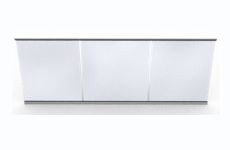
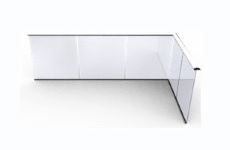
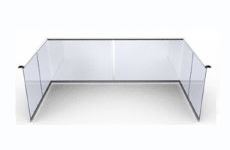
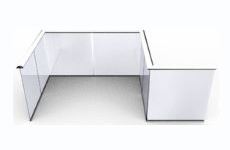
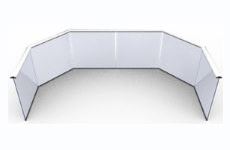
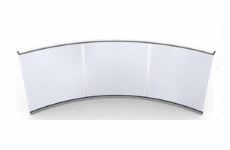
To price your balustrade requirement first choose the shape most similar to yours
Balustrades Compliance Checklist Balustrades Technical Details
Loads on Glass balustrades
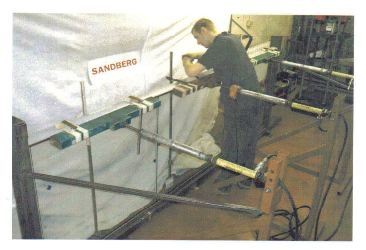 Load testing of our balcony system
The subject of loading and specific loads on balustrades is defined in BS 6399-1:1996, titled 'Loadings for Buildings.' This British standard describes different building types, usages, and areas. The type or use of a building determines the required loading, of course. In this article, we will focus on single-family dwellings, houses, and residential buildings, excluding public areas or areas susceptible to overcrowding. Public areas and places where people may congregate, such as discotheques, bars, restaurants, etc., require a higher loading factor than residential areas.
Building regulations requirements
You may encounter various building regulations being referred to, such as Document K, Document N, M, and others. In relation to balustrades, all of these refer to and are based on two main British standards related to this subject. One is the British Standard 6180, last updated in 2011, called BS 6180:2011 'Barriers in and about Buildings - Code of Practice.' The second is BS 6399-1:1996 'Loadings for Buildings.
How strong does a balustrade need to be?
A handrail of a balustrade, in areas that are not susceptible to overcrowding for residential and domestic houses, will need to withstand 0.74 kiloNewtons (kN) for every meter in length. This is roughly equivalent to 75 kilograms of pressure per meter of handrail, which provides a simple answer to how much pressure is applied.
To give you a better idea of what this means or to visualize how strong a balustrade needs to be, you can imagine a person weighing 75 kilograms, which is about 165 pounds, exerting their entire weight on the balustrade. Essentially, it's like having one person applying pressure every single meter in length.
This simplifies how you should view the loadings. Of course, more specific data is available if you want to refer to BS 6399-1:1996 and BS 6180:2011. You can purchase these technical documents on the BSI website (http://shop.bsigroup.com/) by searching for these titles. Understanding these documents is essential for comprehending glass balustrade loading requirements.
Measuring the loading on a handrail
The loading on a handrail should be measured or tested in a uniformly distributed fashion. This means spreading the load equally across the rail and not applying the entire load at a single point. It's crucial to understand this distinction.
Additional information and load requirements pertain to the glass and infill panels. These requirements include both a uniformly distributed load and a 'point load,' which involves a higher load applied to a single, small point.
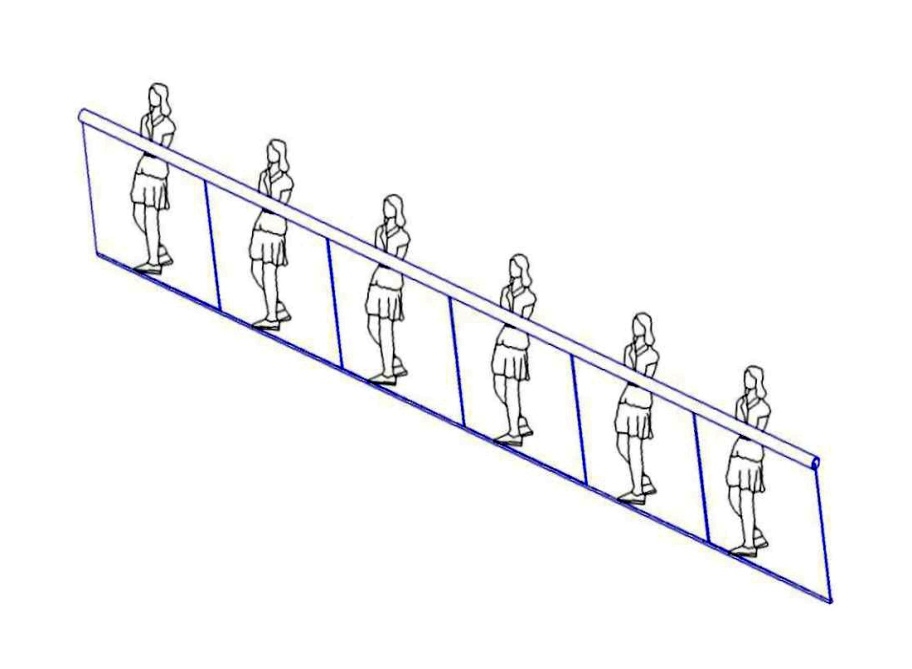
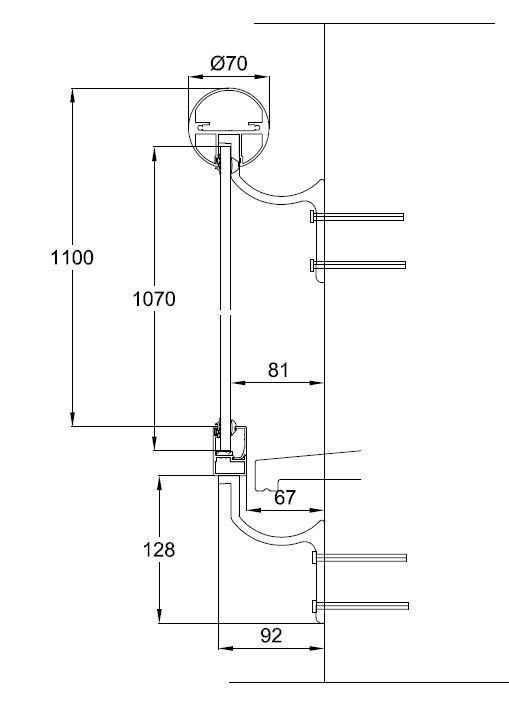
How load should be applied
Calculations and testing
To provide evidence of conformity with the regulations and standards, it is acceptable to demonstrate this either by calculation or through load testing.
At Balconette, we have subjected our systems to rigorous testing and have also engaged engineers to produce system calculations, ensuring we can provide satisfactory proof of compliance with these standards and regulations. Both the test results and calculations are readily available upon request.