Hydrophobic Glass Coatings – Their Applications to Construction, Automotive and Marine Glass
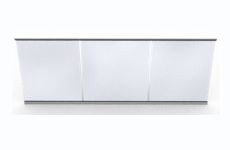
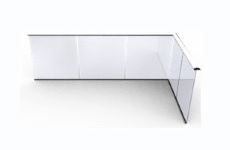
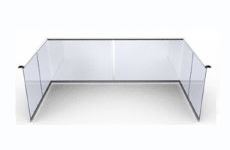
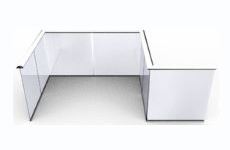
To price your balustrade requirement first choose the shape most similar to yours
What is a Hydrophobic Coating?
A hydrophobic coating is a general term used to describe a substance that can be applied to a surface to repel water. Simultaneously, it also repels dirt, minerals, droppings, and more. When used on glass, it improves visibility and significantly simplifies the cleaning process.
In this article, we will discuss the advantages of using an aftermarket glass coating product that we offer for boats and cars. However, these products can be just as easily applied to windows, showers, marble and stone countertops, as well as the exterior glass balconies for which we are renowned.
The Advantages of Using Hydrophobic Products on Cars and Boats
Such coatings help repel water and dirt, resulting in improved visibility when driving or piloting vehicles such as cars, sailboats, yachts, or larger ships.
Driving in the rain presents a dual challenge. Besides contending with slippery roads, there's the strain of maintaining clear visibility. Even the latest windshield wipers can't always enhance visibility and driver comfort.
Some of the advantages of applying this coating to a vehicle's windscreen include:
- Enhanced Safety - The key lies in a special polymer coating that covers the entire glass surface, creating a durable barrier between water and the windshield. This not only prevents smudging but also, when traveling at speeds above 50 km/h, causes water to smoothly slide off the glass. This leads to superior visibility on highways, sometimes even without the need for windshield wipers.
- 25% Faster Driver Response Time - Drivers looking through hydrophobic glass tend to react to road conditions and hazards 25% faster than those using standard glass. Those precious seconds can make a significant difference.
- The Teflon-Like Non-Stick Surface - It makes it easier to remove ice, dirt, insects, and other obstructions that might block your view. Similar to Teflon used in cooking utensils, even though the utensils require cleaning, residue comes off more easily and generally only requires a wipe with a cloth instead of scrubbing with an abrasive sponge.
Even though utensils require cleaning, food residue comes off more easily and usually only requires a wipe with a cloth instead of scrubbing with an abrasive sponge.
- 33% Better visibility - Hydrophobic glass enhances visibility by 33% compared to untreated glass, sometimes allowing you to confidently and comfortably see through a rainstorm. Note: Hydrophobic glass improves visibility for the entire glass surface, including areas that wipers cannot reach.
- Highspeed safety - At speeds exceeding 50 mph, water slides straight off the surface of hydrophobic glass, making it easier to see the road, sometimes even with the wipers turned off.
- Increased wiper life - Hydrophobic glass reduces the need for windshield wipers under normal conditions, thereby slowing down wear and tear on the blades.
- Ease of Cleaning - The surface of hydrophobic glass facilitates the removal of ice, insects, dirt, and grime, helping you maintain a clear windshield throughout all seasons
- Long lasting protection - Unlike other aftermarket solutions, hydrophobic glass penetrates the glass surface, making it highly durable. The frequency of reapplication will depend on the climate but can last up to 2 years with careful application. Dry and dusty conditions may create additional abrasion, which can reduce the effectiveness of the glass coating over time.
- Longevity - Almost any type of glass can be converted to hydrophobic glass, and a simple regeneration kit can restore hydrophobic glass to full strength even after a few years of rigorous use.
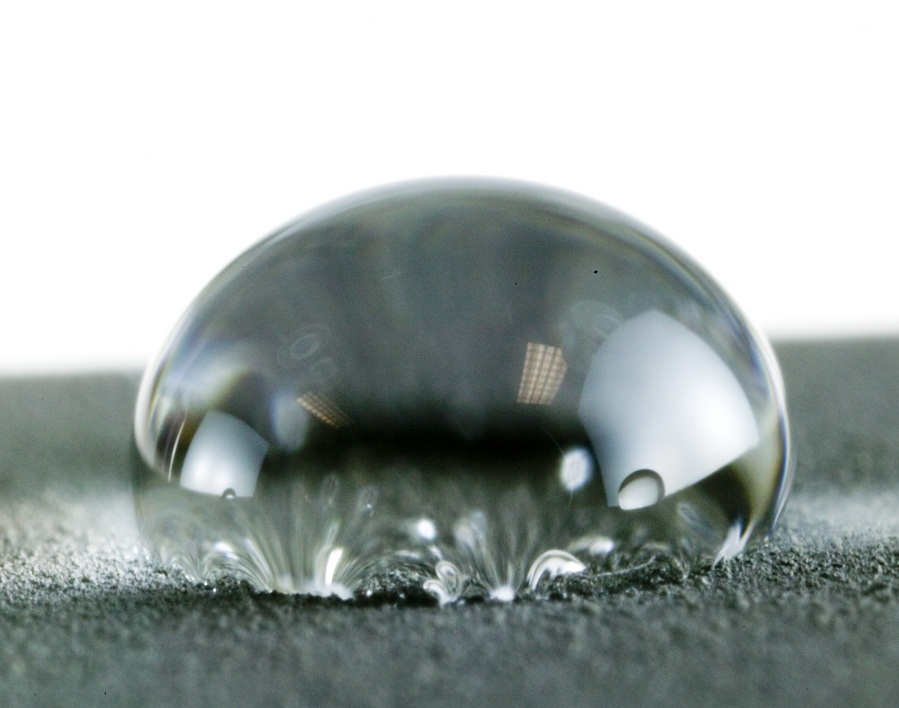
The protective surface of hydrophobic glass alters the shape of water droplets on the windshield itself. Because the water has less contact with the glass, the droplets become rounder, making it easier for windshield wipers or the wind to remove them. This prevents smearing and further enhances visibility.
Durability and lifespan
Hydrophobic coatings are not as extensively utilized in the marine industry as they are in the automotive sector, with the exception being in the case of freshwater yachts and small craft.
Marine craft are consistently exposed to saltwater, which leaves deposits on the windscreen, necessitating frequent rinsing. The good news is that with a bit of rinsing, the windscreens clean up rapidly, as the minerals slide off easily. However, the drawback is that this increased cleaning gradually removes the coating, requiring more frequent reapplication.
Ongoing scientific advancements within this industry aim to perfect the application of the coating to enhance its durability and lifespan.
Water sheeting
A hydrophilic coating is one that attracts water and works with it preventing fogging and providing optical clarity. The coatings reduce distortion by interacting positively with water, causing condensates to spread uniformly over the surface of the coated glass, sheeting water rather than forming droplets that scatter light.
Some companies are currently working on the perfection of water repellent hydrophobic coating as an organic film that will not degrade or delaminate over time, virtually lasting forever. Additionally, these rugged coatings comply with Military Standards. The hydrophobic coating can be provided in either a coated or laminated process. Ideal for touch screens, the coatings provide a barrier against dirt, dust, and a host of aqueous solutions.
Super Hydrophobic Coatings - Future Developments
Super Hydrophobic Coating: Ways to Turn Surfaces Super-Hydrophobic with Coatings
Superhydrophobicity refers to a surface where the contact angle of water falls between 150-180 degrees. A contact angle of 180 degrees indicates that there is virtually no contact between the glass and the water.
Recently, there has been significant interest in developing superhydrophobic properties for a wide range of surfaces. Inspired by the 'lotus-leaf effect,' numerous techniques have been devised to create superhydrophobic surfaces. The goal of scientists working on this development has been to design a coating with a surface structure that mimics that of the lotus leaf, renowned for its water-repelling properties. These applications are still in the experimental stages.
Progress with this type of coating has been limited, and as of now, no durable coating of this nature has been successfully developed. A breakthrough in this field would have a profound impact on society and offer tremendous eco-friendly applications. Up to this point, only durable hydrophobic coatings have been achieved.
Note: The Lotus Leaf Effect refers to a micro-structured, self-cleaning surface where dirt is naturally washed away by rainwater.
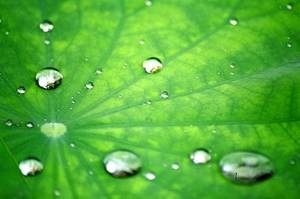
Lotus Leaf repelling water