Roof Terrace Detailing FAQs: What Architects and Specifiers Need to Know
When designing roof terraces above occupied space, many of the most important technical decisions sit within the detail - particularly where structure and waterproofing interact.
At Balconette, we’re regularly asked the same questions by architects, contractors and developers. Often, these questions relate to detailing approaches that are widely accepted across the industry but not always fully understood in terms of their long-term implications.
This BalcoDeck® FAQ series has been created to address those questions directly.
Each month, we’ll add a new question based on real conversations with design teams and project stakeholders. The aim is to provide clear, technically grounded answers that support better-informed decisions at design stage - particularly where waterproofing performance, structural requirements and long-term risk intersect.
Why this matters
Roof terraces introduce a unique challenge within the building envelope. Structural elements such as balustrades must achieve robust load transfer, while the waterproofing layer must remain continuous and reliable over time.
In many conventional approaches, these requirements conflict - resulting in detailing that relies on penetrations through the membrane and long-term performance of sealants.
Understanding these details early in the design process can help reduce lifecycle risk, simplify maintenance and avoid costly remediation.
This series is intended to support that understanding.
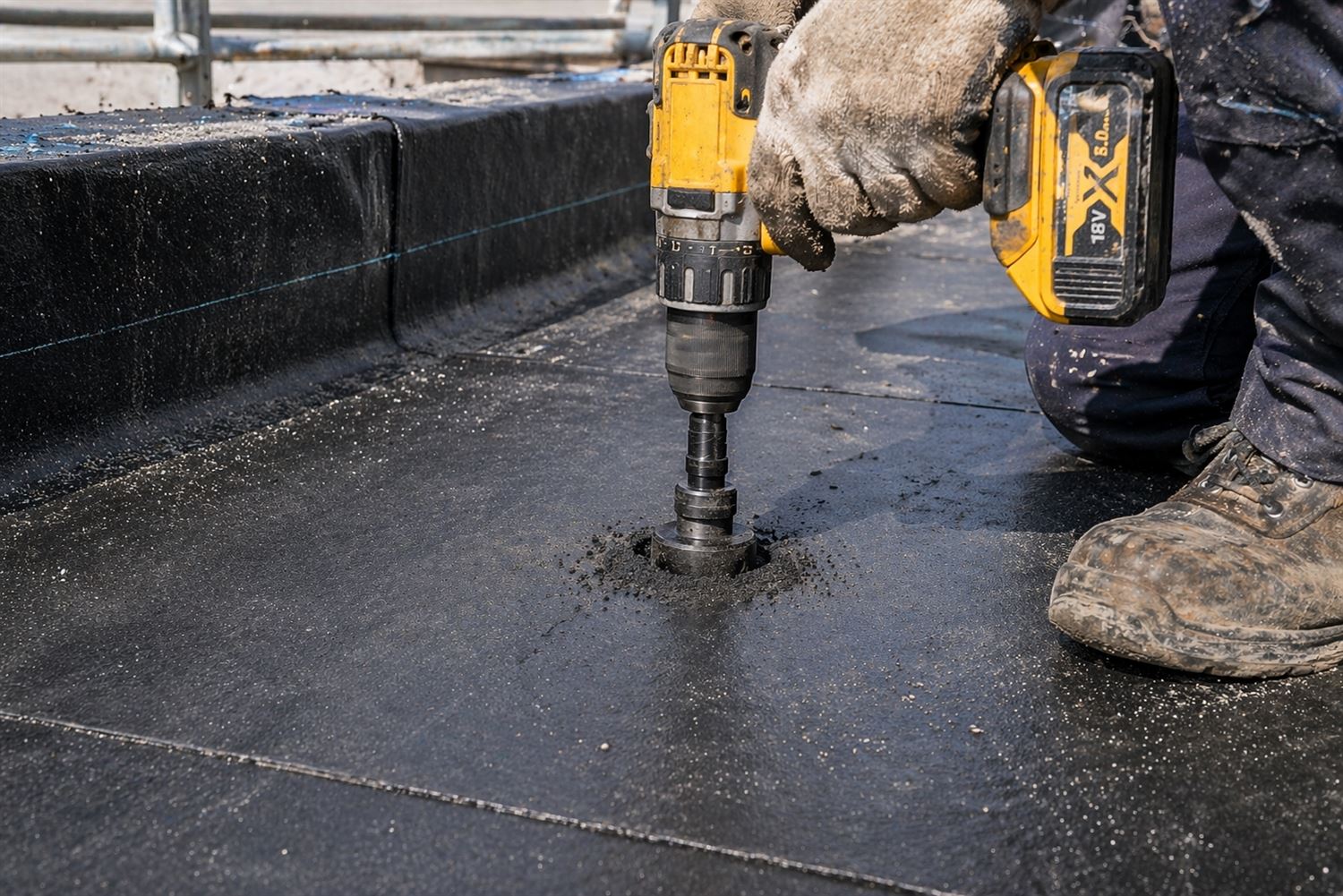
FAQ #1 What happens when you drill through a waterproof membrane?
Short answer:
- You break the continuity of the waterproofing layer
- You introduce reliance on sealants and detailing interfaces
- You create a point that may require long-term inspection and maintenance
Expanded explanation
Waterproof membranes are designed to act as continuous barriers. Their effectiveness depends on maintaining that continuity across the entire roof surface.
When a penetration is introduced - for example, to fix a balustrade post - the membrane is no longer continuous. The waterproofing performance at that point becomes dependent on additional detailing such as collars, flashings and sealants.
While these details can perform effectively when installed correctly, they introduce interfaces that are subject to movement, environmental exposure and material ageing.
Over time, thermal expansion, wind loading and general building movement can place stress on these areas. Because the waterproofing layer is typically concealed beneath the terrace build-up, early-stage deterioration may not be visible.
For this reason, penetrations are often where long-term issues originate - even where the membrane itself remains intact.
Design perspective
This is why some design teams are beginning to question whether penetrations are always necessary - particularly in roof terrace applications above occupied space.
Approaches such as BalcoDeck® aim to address this by allowing structural loads to be transferred above the waterproofing layer, maintaining membrane continuity and reducing reliance on sealant-dependent detailing.
We’ll continue to add to this FAQ series each month, addressing the most common questions we encounter in roof terrace design.