Balustrade Height & Guarding Requirements for Roof Terraces (UK Building Regulations Explained)
Glass Balustrades | Juliet Balconies | Galleries |
When designing roof terraces or balconies above occupied space, balustrades are not simply architectural features - they are critical safety elements governed by building regulations.
At Balconette, we are often asked about the regulatory requirements surrounding guarding and balustrade design. Below we answer some of the most common questions architects and contractors raise.
What are balustrades required to do?
Balustrades are designed to prevent people from falling from elevated spaces such as balconies, terraces and staircases.
In addition to acting as a physical barrier, they must also be capable of resisting structural loads caused by:
- people leaning against them
- crowd pressure in some settings
- wind loads acting on the guarding
Because of these forces, balustrades must be securely designed and properly integrated into the structure.
What is the required height for balustrades in the UK?
Under UK Building Regulations (Approved Document K), guarding heights typically need to be:
At least 1100mm for balconies and roof terraces in residential buildings.
This height is measured from the finished floor level of the terrace to the top of the guarding.
The aim is to provide sufficient protection against accidental falls.
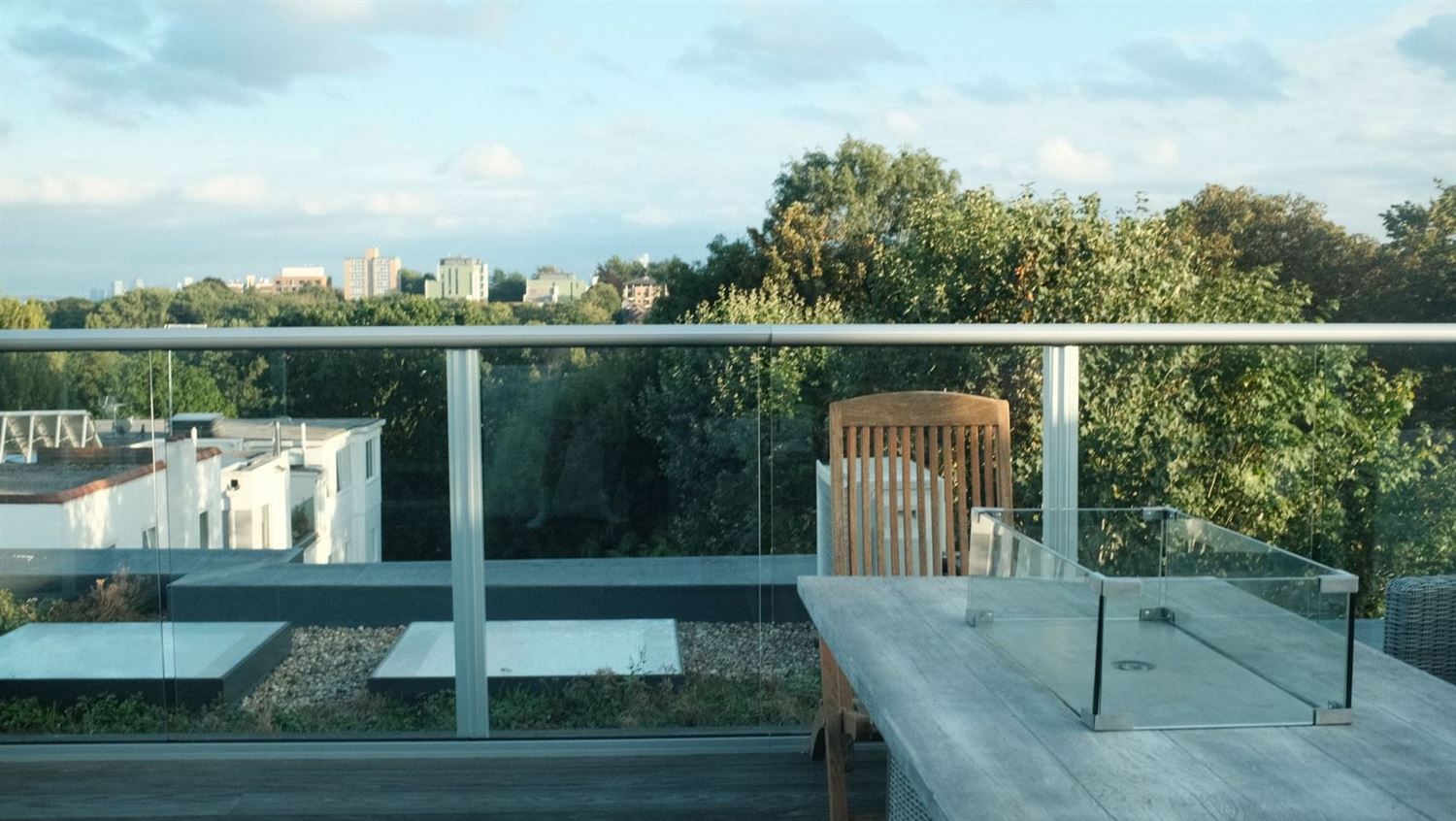
Are there rules about gaps in balustrades? Yes.
Balustrades must be designed so that a 100mm sphere cannot pass through any opening.
This requirement is intended to prevent small children from slipping through the guarding.
Designers therefore need to carefully consider spacing between vertical elements or the use of glass panels.
Do glass balustrades meet regulations?
Glass balustrades can fully comply with UK building regulations when correctly specified.
Typically this involves:
- toughened or laminated safety glass
- structural testing
- appropriate fixing systems designed to resist horizontal loads
Glass systems are widely used on roof terraces because they maintain views while still providing effective guarding.
How are balustrades normally fixed to roofs?
Traditionally, balustrade posts are anchored directly into the structural slab. This approach provides strong structural fixing but can introduce penetrations through the waterproof membrane when terraces are located above habitable space.
These penetrations then need to be carefully sealed to maintain waterproofing integrity.
Are there alternatives to penetrative fixing?
Yes. At Balconette, we developed the BalcoDeck® system specifically to address this challenge.
Instead of anchoring balustrades through the roof structure, the system allows balustrades and decking to be supported by an engineered framework that sits above the waterproof membrane.
This means the roof membrane can remain continuous while still meeting structural requirements for guarding.
Why does this matter for roof terrace design?
Where terraces sit above occupied spaces, maintaining the integrity of the waterproofing system is critical.
Balustrade fixing methods therefore need to consider both structural safety and waterproofing performance.
For architects and specifiers, understanding these requirements early in the design process can help avoid costly redesigns later.
Find out more about our BalcoDeck® product here.