Can a Contractor Substitute a Penetrative Balustrade System if You've Specified Non-Penetrative?
The short answer is no - not without a formal variation instruction.
If your specification states that no component of the roof terrace system shall penetrate the waterproof membrane and requires a Certificate of Compliance at handover, a contractor cannot simply substitute a penetrative system. Any departure from the specification requires formal approval.
In practice, substitution attempts do happen. Most commonly this is because a contractor's preferred balustrade supplier offers a penetrative system as standard, because it is familiar to install, or because they were unaware a non-penetrative* alternative existed. Understanding what your specification gives you - and how to use it - is therefore an important part of managing the project.
What your specification actually gives you
A specification containing an explicit non-penetration performance requirement is a contractual document.
It defines both what the system must achieve - such as compliance with BS 6180 - and what it must not do: mechanically penetrate the waterproof membrane.
It can also require:
Site-specific structural calculations.
Compliance with relevant British Standards.
A Certificate of Compliance at handover confirming the installed system meets the specified performance requirements.
A penetrative system cannot satisfy a requirement that expressly prohibits membrane penetration. If a contractor prices a penetrative solution against that specification, they have submitted a non-compliant tender rather than a compliant alternative.
At tender stage
Before a contract is awarded, the options are relatively straightforward.
The contractor can be asked to:
Reprice using a compliant system.
Explain why they have proposed an alternative.
Submit their proposal as a qualified tender for technical review.
In many cases, contractors are simply unaware that compliant non-penetrative* systems are available. Providing the relevant technical information early in the tender process often resolves the issue before it becomes a contractual dispute.
After the contract has been awarded
Once a contract is in place, the position depends largely on how the specification has been written.
Where an explicit non-penetration requirement exists, proposing a penetrative system represents a departure from the specification and should be treated as such.
Where the specification simply names a preferred product without defining the performance requirements, the contractor's position may be stronger and formal contractual procedures may be required before changes can be instructed.
This is why the wording of the original specification is so important.
Prevention is better than correction
The simplest solution is to ensure the specification is written correctly during RIBA Stage 3 or early Stage 4.
A clearly written performance specification removes ambiguity before tenders are submitted. Contractors either price a compliant solution or formally request a variation. Both routes are transparent and both protect the integrity of the design intent.
Managing substitution after contracts have been placed is considerably more time-consuming than preventing it at design stage.
What do we mean by "non-penetrative"?
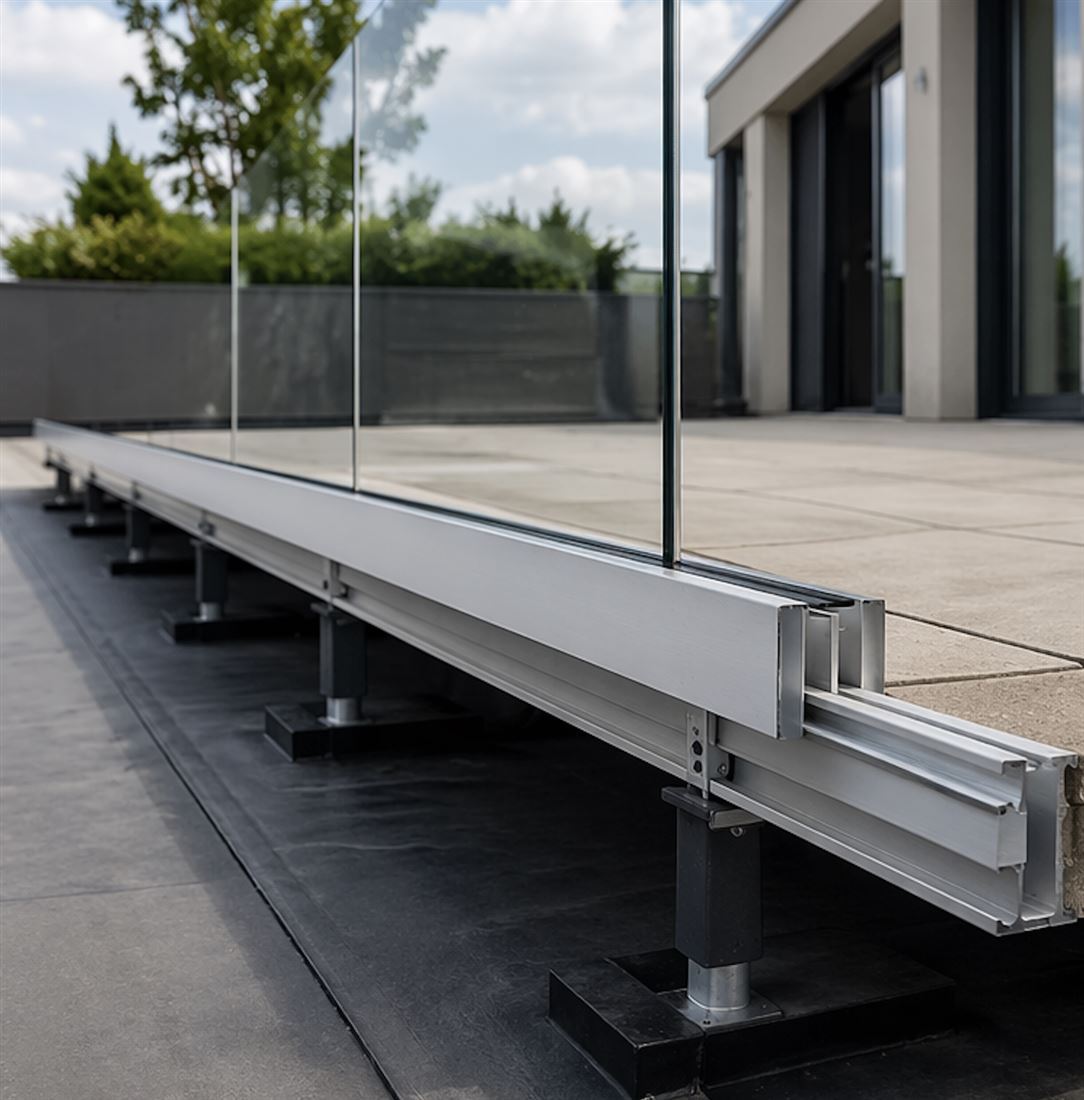
A non-penetrative roof terrace system is one that does not drill, bolt or mechanically fix through the waterproof membrane or roof build-up. Instead, the system is engineered to achieve the required structural performance while leaving the waterproofing layer intact. BalcoDeck® is an example of a patented non-penetrative roof terrace system that uses a specially engineered substructure to support decking and balustrades without penetrating the membrane.