Are Balustrades the Next Grenfell Disaster Waiting to Happen?
Let’s have a look at what happened at Grenfell Tower that made it such a disaster.
What About the Paper Work?
Well, people — or I should say companies — installed cladding, insulation and other building components, all backed by pieces of paper claiming compliance with the relevant standards and building regulations.
But in reality, when it came to the real test, we all saw what happened.
The subsequent Grenfell Tower Inquiry exposed serious failings in the testing, certification, selection and installation of construction products.
The Paper Work Didn’t Help!
Nothing written on a piece of paper could protect the people living in that building when the materials and systems used were not safe for their intended application.
Paperwork is important, but it is only as reliable as the testing, engineering and actual installation behind it.
Grenfell and Balustrading
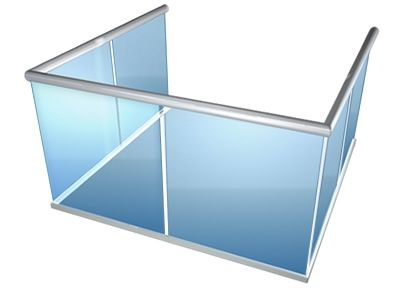
A similar concern exists in the glass balustrade market, where systems can be installed that are not fit for purpose.
We are not suggesting that balustrade failures are the same as the fire-safety failures at Grenfell. The concern is the same underlying issue: whether the products installed in buildings genuinely perform as their documentation claims.
The Paper Work Is All Good!
Systems are being installed that have all their “paperwork” in order, stating that they meet certain criteria or presenting test information claiming this, that or the other.
But does the paperwork reflect the performance of the actual system being installed?
The Reality of the Standards
In reality, we can tell you from our own experience that we have seen information and claims which raise serious questions about whether systems would stand up to the actual requirements of the standards they are supposed to meet.
We work with these standards and understand how they operate.
We have seen reported deflection numbers that we find difficult to reconcile with the apparent system construction.
We have seen claims relating to glass thicknesses that deserve much closer examination.
Fixings
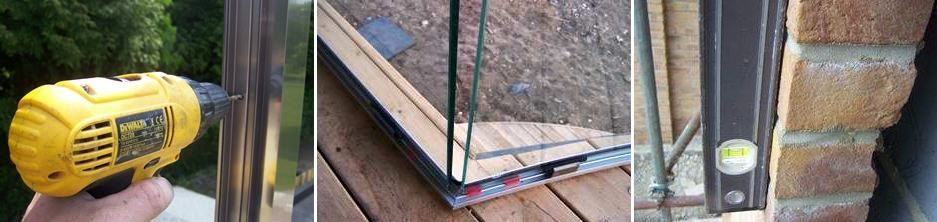
There are many inexperienced people installing systems, and we have seen structural balustrades fixed to the decking surface and not the structure underneath.
In practice, some installations do not use the right fixings or the correct materials. The connection to the building itself may not have been adequately considered.
So what happens when it comes to the practical, real-life test and, God forbid, something fails? Questions will be asked.
BS 6180:2011 recommends that the strength of fixings, attachments and anchorage is sufficient for the loads they must resist. Where uncertainty exists about the strength of a fixing component, it recommends increasing the design loading factors by 50%.
The reason is quite logical: a barrier should provide an indication of failure through deformation rather than collapse suddenly because its fixings give way.
We have seen documentation that does not adequately demonstrate how the proposed fixing arrangements satisfy these requirements.
This can make the paperwork used to sign off balustrades dangerously misleading if the underlying engineering has not been properly established.
Buildings Built of Paper
In the building industry, we are not the only area with this problem.
The challenge is the cost of testing. We know because we have spent the money to do our own testing, have our own in house test laboratory, and so we know what it takes and what it costs — it's painful!
The trouble is that less scrupulous operators can focus on obtaining the required paperwork rather than ensuring that the system itself is properly engineered and tested.
That leaves us with the danger of buildings being built on paperwork rather than the actual performance required.
Nothing Goes Wrong – Nothing Changes
While everything goes along without any obvious problems, issues can be ignored, and people are reluctant to rock the boat.
Then, every now and again, a major failure occurs and all hell breaks loose. Suddenly everyone jumps on the bandwagon and says we need to make changes.
Surely we should be identifying these problems before somebody gets hurt.
Example of the Kind of Problem That Exists
Let's take an example of structural glass balustrades using 17.5 mm laminated glass (Using two plies of 8mm toughened glass and a 1.5mm PVB interlayer).
We have seen paperwork claiming that systems using this thickness can meet a horizontal line load of 0.74 kilonewtons per metre.
Now, 0.74 kN/m is a line load, not a point load. The relevant standard also specifies separate concentrated point-load and infill-load cases, depending on the building's use.
Our concern is whether a particular glass panel and its support system can actually resist the specified loads without excessive deflection or other unacceptable behaviour.
For some panel dimensions, interlayers and fixing arrangements, 17.5 mm laminated glass may simply not provide adequate performance.
Other properly engineered configurations may comply. The important point is that glass thickness alone does not demonstrate compliance.
The complete system must be assessed, including its support, fixing arrangement, glass construction, loading and deflection.
They Actually Exist
Unfortunately, installations that raise these concerns do exist.
We have seen examples on substantial projects where the glass specification and the supporting documentation have left us questioning the design.
Another important consideration is what happens when the glass breaks.
A typical 17.5 mm laminated construction may comprise two 8 mm glass plies with an approximately 1.5 mm interlayer.
Once one of those glass plies breaks, the remaining strength and behaviour of the panel can be very different from its original condition.
Whether the system can maintain adequate containment and residual safety depends on the glass type, interlayer, support details and the overall design.
This cannot simply be assumed from the fact that the glass is laminated.
The problem is that these matters may receive insufficient attention because nothing major has gone wrong — yet.
Price vs. Quality vs. Safety
We all know that price affects decisions, and whilst this can be acceptable in many circumstances, when talking about safety, how much do we put on the price of human life?
When a large job requires a substantial quantity of balustrading, the difference in price between 17.5 mm, 21.5 mm and 25.5 mm laminated glass can be significant.
There will naturally be financial pressure to use the thinner, cheaper option where paperwork suggests that it is acceptable.
But the correct glass specification must be determined by the actual engineering requirements, not simply by the lowest price or an isolated test certificate.
Depending on the application, thicker glass or a different laminated construction may be necessary. Equally, thickness alone does not make a system safe.
The design, testing, installation and fixings must all work together.
What Has Changed Since Grenfell? — 2026 Update
Since the Grenfell Tower tragedy, the construction industry has faced much closer scrutiny.
The Grenfell Tower Inquiry's final report, published in September 2024, exposed serious shortcomings in the construction product testing and certification system, including misleading product information and failures of oversight.
The Building Safety Act 2022 introduced substantial changes to the building safety regime in England, and further construction product reforms remain under development.
By September 2026, the government reported that 30 of the 61 recommendations being tracked following the Grenfell Inquiry had been completed, with the remainder still in progress.
These developments reinforce the point of this article.
It is not enough for somebody to present a certificate, a calculation or a test report. The information must be relevant to the actual product, its intended use and the way it is installed.
For structural glass balustrades, that means examining the required loads, deflection, glass construction, residual safety following breakage, fixings and supporting structure.
A compliant-looking piece of paper is not a substitute for a properly engineered and safely installed balustrade.
Time to Wake Up
We think the industry needs a wake-up call on the subject of balustrades.
We know it is unlikely that anything on the scale of the Grenfell Tower tragedy would happen as a result of a single balustrade failure, but what if it was your family who lost someone because a system failed?
Surely we should be doing everything we can to make sure that never happens.